Contrary to popular belief, fighting the winter blues is not a binary choice between a lamp and a pill: the real priority is resynchronizing your internal biological clock.
- Morning light therapy sends a powerful and essential wake-up signal to your brain to reset your circadian rhythm, which is disrupted by the lack of light.
- Vitamin D is an essential physiological foundational support, but it cannot replace light’s role as the “conductor” of your mood and energy.
Recommendation: Prioritize establishing a consistent morning light therapy routine, then complement it with adequate Vitamin D supplementation for a complete and effective anti-winter depression strategy.
November is settling into Canada, bringing with it that heavy shroud of fatigue that seems to grow heavier every morning. Energy crumbles, motivation melts like the first snow in the sun, and the simple act of getting out of bed becomes an ordeal. This “winter blues,” or Seasonal Affective Disorder (SAD) in its more pronounced forms, is a reality that many people experience intimately. In response, the two most frequently mentioned solutions are light therapy lamps and vitamin D supplements. We then wonder which one to choose, which is more urgent, and which is more effective.
However, this question, while legitimate, leads us down a false path. The debate is not so much about choosing one or the other, but about understanding their fundamentally different and complementary roles. Most advice stops at “get some light” and “take supplements,” without ever explaining the essential mechanism happening behind the scenes. What if the real key to not just surviving, but thriving during the Canadian winter, lay not in adding an element, but in restoring a rhythm?
The perspective we are going to explore is that of chronobiology, the science of the body’s rhythms. It’s not just about fighting darkness, but about actively resynchronizing your internal biological clock. This article will guide you, step by step, to understand how to use light, exercise, and even breaks as precision tools to reset your internal clock from waking to bedtime. We will see why your desk lamp is powerless, how a sunrise simulator can transform your mornings, and why a light therapy session at the wrong time can sabotage your sleep.
This article is structured to provide you with a clear, science-based roadmap to regain control of your energy and mood this winter. Discover below the key steps to transform your approach to the seasonal blues.
Summary: Your guide to resynchronizing your biological clock this winter
- Why your desk lamp isn’t enough to trick your brain in winter?
- How to use a sunrise simulator to stop waking up tired?
- White or blue light: which one to choose to avoid damaging your eyes?
- The mistake of doing your session at 7 PM that prevents you from sleeping until 2 AM
- When to stop treatment: signs that your mood has stabilized in the spring
- Why morning exercise is crucial for fighting seasonal depression?
- When to stop during the day: the 90-minute rule for recharging the brain
- How to do a “digital detox” on the weekend without FOMO?
Why your desk lamp isn’t enough to trick your brain in winter?
You might think that by working all day in a well-lit office, you are giving your body the necessary dose of light. This is a common error in perception. The problem is not the total absence of light, but its dramatically insufficient intensity to influence our biological clock. The unit of measurement for illuminance is the lux. A sunny summer day can exceed 100,000 lux. Conversely, an artificially lit office barely reaches 500 lux.
To trigger a hormonal response and “tell” our brain that the day has begun, a light therapy lamp must deliver an intensity of 10,000 lux at a reasonable distance. According to medical standards, the difference is immense: a study on medical lamp standards shows that a standard office receives barely 5% of the therapeutic dose. Thinking your desk lamp is enough is like trying to stay warm with a match in the middle of a Canadian blizzard. The signal is too weak, your brain ignores it, and the morning fog persists.
Choosing the right lamp is therefore crucial, but the market can be confusing, especially in Canada where regulations are specific. It is not a gadget, but a therapeutic instrument. Although no device is officially “approved” or “patented” by Health Canada, there are safety and efficacy criteria to check to make an informed choice. Furthermore, be aware that light therapy is generally not covered by provincial health insurance plans, but some private insurance companies may offer partial reimbursement.
Your action plan for choosing a safe light therapy lamp in Canada
- Check for UV absence: The packaging must explicitly mention “UV-free” or “UV filter.” UV exposure is harmful to the eyes and skin.
- Look for medical standards: Ensure the lamp meets electrical safety standards for Canadian medical instruments (e.g., CSA or cUL certification).
- Consult independent tests: Organizations like Protégez-Vous regularly test models available on the Canadian market. Their reviews are a valuable and impartial resource.
- Beware of vague claims: Avoid “light therapy bulbs” or products with vague promises sold on online platforms without clear technical specs.
- Prioritize white light: As we will see, full-spectrum white light is the gold standard for its proven efficacy and safety.
How to use a sunrise simulator to stop waking up tired?
The brutal awakening of a blaring alarm in a dark room is one of the most stressful experiences for our nervous system. It is a panic signal that forces an abrupt transition from sleep to wakefulness. In winter, when mornings are dark until late, this phenomenon is exacerbated. The sunrise simulator offers a gentle and scientifically sound solution: it doesn’t wake you up; it lets you wake up.
Its principle is to mimic the natural rising of the sun. About 30 minutes before your wake-up time, the device begins to emit a very soft light, the intensity of which increases very gradually. This light signal, even perceived through closed eyelids, is interpreted by your brain. It triggers a key hormonal process: the gradual suppression of melatonin, the sleep hormone. Simultaneously, it prepares the production of cortisol, the wake-up hormone. The result is a natural awakening, without stress, at the moment your body is ready. You feel not pulled out of sleep, but simply arrived at your destination.

This method is particularly effective during long Canadian winters, where sunrise can occur well after 8 AM. By creating a “personal dawn,” you give your biological clock the first coherent signal of the day, long before starting your light therapy session. This is the first step to aligning your internal rhythm with your workday, thus reducing the famous “sleep inertia” that makes you feel groggy for the first hour of the day.
White or blue light: which one to choose to avoid damaging your eyes?
Once the decision is made to invest in a lamp, a technical question arises: should you opt for broad-spectrum white light or blue light, often presented as more “concentrated”? Although blue light is an active component in stimulating our biological clock, caution is advised. White light is considered the gold standard by the scientific community for reasons of efficacy, comfort, and safety.
Full-spectrum white light lamps (around 6500K) mimic daylight and have been the subject of decades of clinical studies validating their effectiveness. They are also visually more comfortable for 30-minute sessions. Blue light lamps, on the other hand, isolate the wavelength most effective for circadian resynchronization, allowing for shorter sessions or lower intensity. However, their long-term safety for the retina is still debated, and they can cause more eye strain. For someone starting out, the choice of safety and comfort should prevail.
As clinical psychologist Marie-Pier Lavoie points out in an article for the Quebec magazine Protégez-Vous, vigilance is essential:
There is no light therapy device that is patented or displays a Health Canada seal.
– Marie-Pier Lavoie, Clinical Psychologist
This statement serves as a reminder to rely on clinical recommendations rather than marketing. The following table summarizes the key points to help you make an informed choice.
| Criterion | White Light (6500K) | Blue Light |
|---|---|---|
| Therapeutic Efficacy | Proven by numerous clinical studies | Effective but less documented long-term |
| Visual Comfort | More pleasant, less irritating for most users | Can cause eye strain or headaches |
| Safety | Considered the gold standard, recommended by professionals | Caution required; long-term effects on the eye are still being discussed |
| Canadian Recommendation | Favored by healthcare professionals for general use | Usage to be considered with caution, potentially after medical advice |
The mistake of doing your session at 7 PM that prevents you from sleeping until 2 AM
The effectiveness of light therapy relies not only on intensity (the 10,000 lux) but, even more crucially, on timing. This is the most frequent and counterproductive mistake: thinking that a “dose” of light in the evening can compensate for a dark day. It is quite the opposite. Doing a light therapy session in the evening sends a chaotic signal to your biological clock. You are telling your brain: “It’s morning, wake up!” at the very moment it should be starting to produce melatonin to prepare for sleep.
This late exposure to intense light blocks melatonin secretion for several hours. Result: you might feel more alert at 8 PM, but when you go to bed, your brain won’t be ready. You risk tossing and turning until 1 or 2 AM, long enough for the light signal to dissipate and for melatonin production to finally restart. You have just created an artificial jet lag, which will only worsen your fatigue the next day.
The golden rule is therefore unchangeable: light therapy is an exclusively morning treatment. It serves to advance your biological clock, not to delay it. CANMAT (Canadian Network for Mood and Anxiety Treatments) is very clear on this subject. According to their recommendations, optimal exposure is 30 minutes in the morning, shortly after waking up. This morning signal anchors your entire rhythm for the next 24 hours. To avoid making a mistake, here is a simple schedule protocol to follow:
- Use the lamp only in the morning, ideally before 9 AM, to simulate an early sunrise.
- Avoid any exposure to intense light after sunset (which can be as early as 4:30 PM in December in Canada).
- If you work in the evening and need a boost, a very short session (10-15 minutes) is conceivable, but never after 1 PM.
- Respect a distance of 30 to 50 cm from the lamp, placing it slightly to the side so as not to look directly at the light source.
- Start with 15 to 20-minute sessions to assess your sensitivity, then gradually increase to 30 minutes.
When to stop treatment: signs that your mood has stabilized in the spring
Light therapy is not a lifelong treatment, but seasonal support. Its goal is to compensate for the lack of natural light during the darkest months. The question of when to stop is therefore as important as when to start. The answer is simple and intuitive: when nature takes over. In Canada, this is generally after the time change in the spring, around April or May, when mornings become bright again and daylight hours lengthen significantly.
The main indicator is your own state. If light therapy is effective for you, the effects are felt quickly, often from the first week of treatment. You should notice an improvement in your energy in the morning, a more stable mood, and greater ease in falling asleep at night. When spring settles in, you may begin to feel that you no longer “need” your morning session as much. This is the signal that it is time to start a gradual withdrawal.
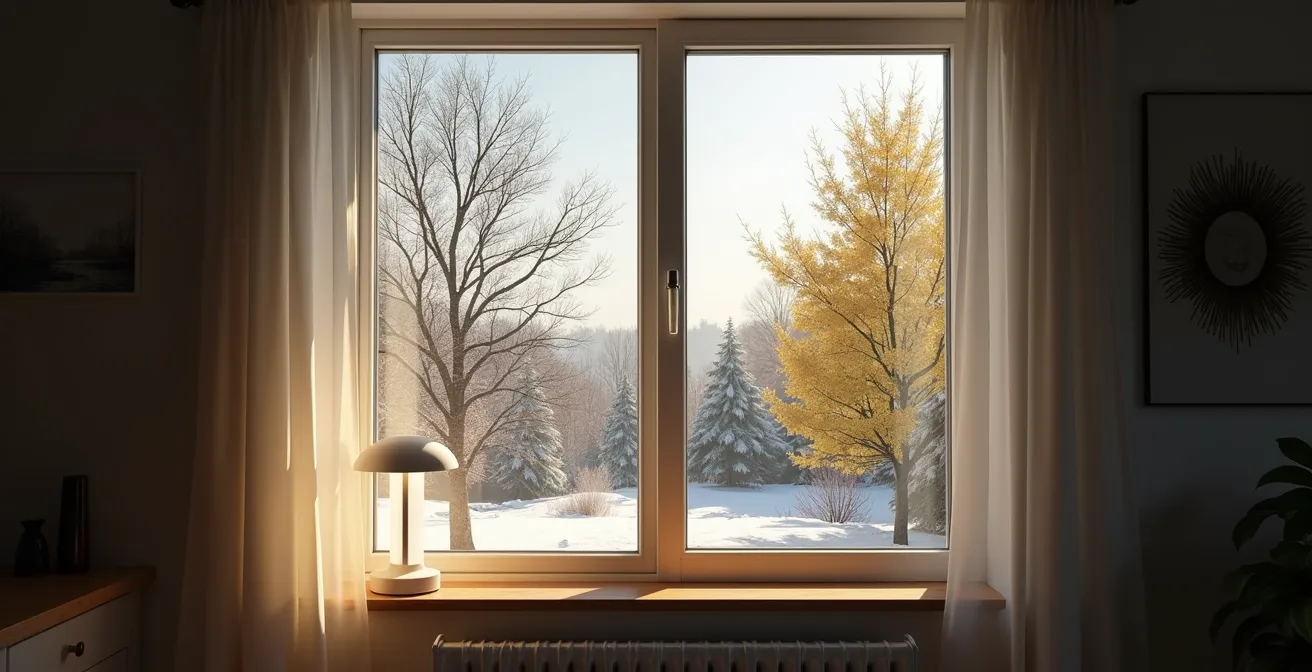
Stopping abruptly is not recommended. It is better to proceed with a gentle reduction to allow your body to readapt to natural light. A simple withdrawal protocol spans two to three weeks:
- First, reduce the duration: Move from 30 minutes to 15-20 minutes each morning for one week.
- Then, decrease the frequency: Do your session at the reduced duration every other day for one week.
- Stop completely: If you feel good, you can pack away your lamp until the following autumn, usually around October, when the first symptoms of seasonal depression tend to reappear.
This gradual withdrawal process ensures a harmonious transition and prevents a sudden return of fatigue. It is a way of listening to your body and synchronizing yourself, this time, with the return of the sun.
Why morning exercise is crucial for fighting seasonal depression?
If light is the main conductor of our biological clock, physical activity is its first violin. Exercising, especially in the morning, sends a second powerful and complementary wake-up signal to that of light. This triggers a cascade of benefits that directly fight the symptoms of seasonal depression. On one hand, exercise increases body temperature and promotes cortisol release, two mechanisms that signal to the body that the active day has begun.
On the other hand, it stimulates the production of endorphins, our natural “feel-good hormones,” which have an immediate antidepressant and anxiolytic effect. Combining a morning sports session with light exposure (either by exercising near a window or by following up with a light therapy session) creates a powerfully effective synergy to clear the mental and physical fog of winter.
There’s no need to force an hour of intensive gym time. The important thing is to move and activate the body shortly after waking up. Even 20 minutes is enough to trigger these beneficial processes. For Canadian winter mornings where a trip outside at -20°C is unmotivating, indoor options are numerous and accessible:
- Try a virtual workout class: YouTube is full of free HIIT (high-intensity interval training), dynamic yoga, or Pilates sessions that require no equipment.
- Dance in your kitchen: Put on your favorite playlist and move freely while preparing your coffee. It’s a great way to wake up body and mind.
- Do 20 minutes of exercise near a window: Set up your yoga mat or light weights in front of the largest window in your home to catch the first rays of natural light.
- Combine exercise and light therapy: Place your lamp on a table next to your stationary bike or treadmill to kill two birds with one stone.
The key is to find an activity you enjoy and integrate it as a non-negotiable morning ritual. It’s a direct investment in your mood for the rest of the day.
When to stop during the day: the 90-minute rule for recharging the brain
We have talked a lot about the circadian rhythm, the grand 24-hour cycle that governs our sleep and wakefulness. But our energy during the day is also governed by shorter cycles called ultradian cycles. The best known is the 90-minute cycle, during which our brain moves from a state of high concentration to a state of relative fatigue. Ignoring this natural rhythm and forcing concentration for hours is a recipe for burnout and decreased productivity, especially when our energy is already low in winter.
The solution is not to work harder, but to work smarter, in harmony with these energy waves. The 90-minute rule is simple: work in a focused manner for a period of 75 to 90 minutes, then grant yourself a real 15 to 20-minute break. A “real” break means stepping away from your task completely: stand up, stretch, look out the window, talk to a colleague, or simply close your eyes and breathe.
This break is not a waste of time; it is an essential recharge phase. It allows your brain to consolidate information, clear out the metabolic “waste” of concentration, and prepare for the next cycle. In winter, this break can be optimized by exposing yourself to light. A short walk outside around noon, even on a gray day, will expose you to a luminosity far superior to that of your office, helping to maintain your alertness level for the afternoon. This midday light break is an excellent complement, but in no way replaces the morning light therapy session, which remains the cornerstone of synchronizing your clock.
Key Takeaways
- The primary goal is not just to add light or a vitamin, but to resynchronize your internal biological clock, the true conductor of your mood and energy.
- The timing of light exposure is more important than the duration: a morning session resets your rhythm, while an evening session disrupts it and sabotages your sleep.
- A holistic approach combining morning light therapy, exercise, rhythmic breaks, and a digital detox is far more effective than a single solution for getting through the Canadian winter.
How to do a “digital detox” on the weekend without FOMO?
We have seen how to use light to send the right signals to our brain in the morning. But it is just as crucial to avoid sending the wrong signals in the evening. The main source of conflicting signals in our modern life is the blue light emitted by our screens (phones, tablets, computers, televisions). Exposing yourself to this light in the hours preceding bedtime has the same effect as a mini-light therapy session at the wrong time: it suppresses melatonin production and tells our brain to stay alert.
Doing a “digital detox” in the evening and on weekends is therefore not just wellness advice for “disconnecting,” it is a fundamental chronobiology measure to protect your sleep and, consequently, your mood for the next day. The fear of “missing out” (FOMO) is real, but it can be managed by passively replacing screen time with actively chosen and rewarding activities, especially those that embrace the Canadian winter season.
Shorter days and longer nights can disrupt your internal clock, making it harder to maintain energy and focus.
– Allstate Canada, Winter Wellbeing Blog
This disruption is amplified by screen exposure in the evening. The key is planning. Instead of succumbing to the reflex of picking up your phone, organize screen-free rituals in advance.
- Define specific screen-free time slots: For example, no phones in the bedroom, or “airplane mode” for the whole family from 8 PM until the next morning.
- Plan replacement activities: Instead of scrolling, plan an evening of reading, board games, or listening to music or podcasts.
- Embrace Canadian winter activities: Plan a skating outing, a snowshoe walk, or a cross-country skiing session on the weekend. Physical activity outdoors, even in overcast weather, is an excellent source of natural light.
- Create end-of-day rituals: Replace the blue glow of the screen with the warm glow of a fireplace, candles, or soft ambient lighting to signal to your body that it is time to relax.
In conclusion, the answer to the question “light therapy or vitamin D?” is: both, but not with the same priority. The first and most crucial step is to reset your biological clock with a powerful morning light signal. This is the irreplaceable role of light therapy. Vitamin D, meanwhile, is the essential fuel your body needs to function optimally—an indispensable support, but one that cannot orchestrate the rhythm. By adopting this comprehensive approach and synchronizing light, exercise, and rest periods, you won’t just survive the Canadian winter; you will give yourself the means to thrive in it with energy and serenity. To put this advice into practice, the next step is to evaluate your current routines and identify the first small habit you can change starting tomorrow morning.
Frequently Asked Questions on Managing Seasonal Affective Disorder
When should I take my vitamin D to optimize its effect?
Ideally during your lunch break, around noon, to mimic the natural cycle of production by the sun. Taking it with a meal containing some fat improves its absorption, as it is a fat-soluble vitamin.
Can a light break replace morning light therapy?
No, it is a complement, not a substitute. The intensive morning light therapy session is what anchors your biological clock for the day. The afternoon light break, like a short walk outside, simply helps maintain energy levels and combat the mid-day slump.
How long should a break last according to the ultradian cycle?
To respect the brain’s natural concentration cycles, an effective break lasts between 10 and 20 minutes and should be taken approximately every 90 minutes. This is enough to allow your brain to “reset” without breaking your work momentum.